Charcuterie 101: The Cured Meats I Fell In Love With in Italy and Spain

A few years ago, I found myself standing in the middle of Mercat de la Boqueria in Barcelona, completely overwhelmed, not by the crowds, but by the ham. Rows of jamón hanging from the ceiling, wedges of manchego stacked like gold bricks, vendors slicing paper-thin cuts right in front of me. Everything tasted like it had been made an hour ago. That freshness stuck with me. It's a big part of why, when I build a board today, I obsess over sourcing the same way that market did: nothing sitting around, nothing phoned in.
That trip (Rome, Florence, Bergamo, and Milan, then Barcelona) is where my charcuterie education really started, even if I didn't know it at the time. So for the first post in our new weekly series on the Charqute Table, I wanted to walk you through the cured meats I fell for out there, the ones I still build every board around today, and why.
Charcuterie Meats at a Glance
- Prosciutto: dry-cured Italian ham, sliced paper-thin, mild and slightly sweet.
- Italian dry salami: fermented and air-dried, firm texture, tangy flavor.
- Coppa: cured from the pork neck and shoulder, fattier and richer than salami.
- Peppered or hot salami: salami cured with cracked pepper or chili for extra heat.
Prosciutto: Where It All Clicked (Milan)

My first real "aha" moment with charcuterie happened in Milan, of all places, over a prosciutto and melon salad and a martini at the Dolce & Gabbana café. Simple dish. Two ingredients doing all the work. The saltiness of the prosciutto against the sweetness of the melon is one of those pairings that sounds almost too easy until you taste it. These days, prosciutto is still my go-to for wrapping around a soft cheese, draped loosely into ribbons, never laid flat. It's the meat that taught me restraint: sometimes two ingredients is the whole point.
Italian Dry Salami: The Everyday Favorite (Florence)

Florence is where I fell hard for the Italian sandwich: fresh bread, sharp cheese, and thin-sliced salami, usually eaten standing up somewhere I couldn't tell you the name of anymore. Italian dry salami is still the cured meat I reach for most on a weekly basis. My go-to is presliced, not because I'm precious about it, but because presliced is genuinely easy to work with, gives consistent flavor, and doesn't require me to pull out a slicer for a Tuesday night board.
Coppa: The Quiet Showstopper

Coppa doesn't get the same headline treatment as prosciutto, but it should. Made from the muscle running along a pig's neck to shoulder, it's fattier and more marbled than most salamis, which gives it a richer, almost buttery bite. I like laying it in loose folds rather than a tight rosette. It holds its shape better and looks less "fussy" on a board.
Peppered & Hot Salami: For When the Board Needs an Edge

Every board benefits from one thing that surprises people. That's usually where a peppered salami or a hot salami comes in for me, the kind with visible cracked pepper or a chili kick baked into the cure. It's not for every guest, but the ones who find it always come back for seconds.
Barcelona, Revisited
Back to that market in Barcelona for a second, because it's also where I properly understood manchego, which almost always ends up next to whatever cured meat I'm serving. Nutty, firm, a little sharp. Paired with a good ham or an Italian dry salami, it's one of those combinations that feels obvious in hindsight but takes actually standing in a Spanish market, ham hanging over your head, to fully get. And Rome, in its own way, taught me the opposite lesson: sometimes the best food (I'm looking at you, pizza near the Colosseum) doesn't need a plan at all. It just needs to be good.
Bringing It All Together
All of this, the salami, the coppa, the prosciutto, the pepper-kissed cuts, is exactly what goes into building a board people actually remember. If you want to try assembling one yourself, our How to Build a Charcuterie Board Like a Pro post walks through the whole process step by step.
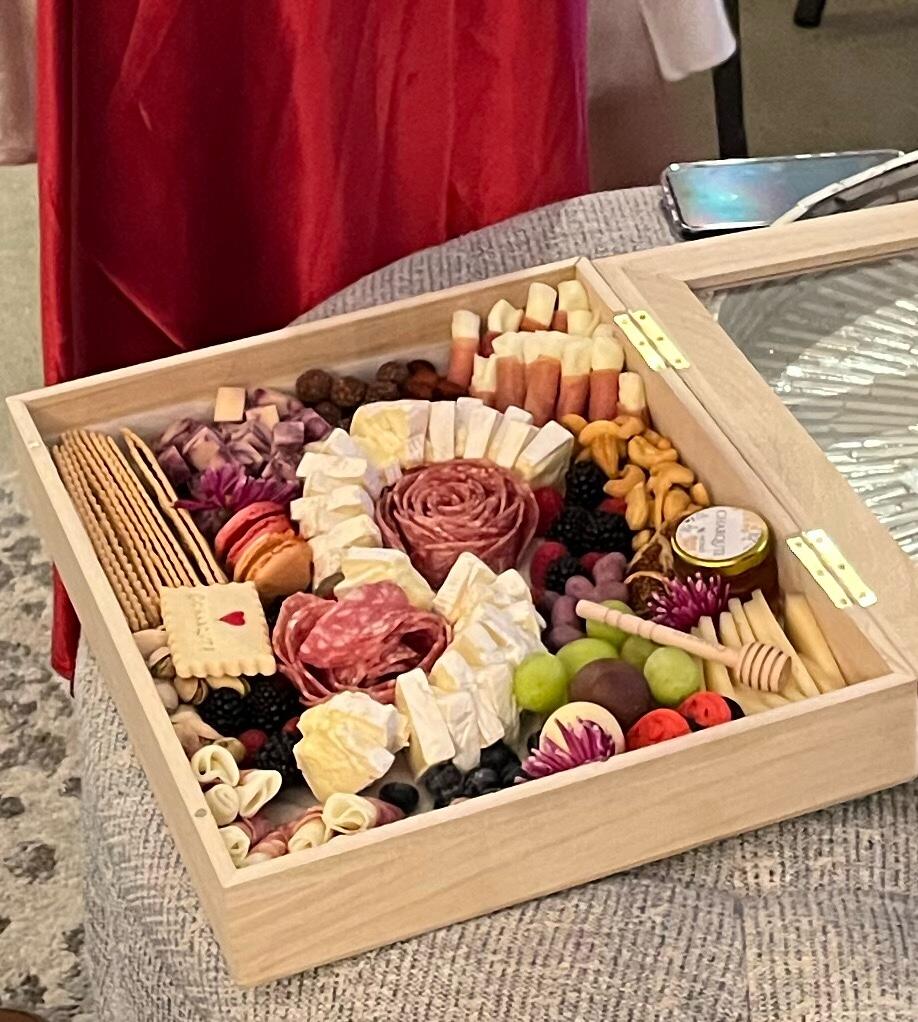
And if you'd rather skip the shopping, slicing, and rolling? That's what we're here for. Our Small Charcuterie Board, our best seller, is built around three premium cheeses and three cured meats, often featuring a rotation of the very cuts above. It comfortably serves 5 to 6 people as an appetizer spread, or works just as well as a full meal for two or three of you. Starting at $129, handcrafted the morning of your event, with same-day pickup or delivery across Los Angeles when you order by 10:30 AM.
Charcuterie Meat FAQs
What is the difference between prosciutto and coppa?
Prosciutto is a whole-muscle leg ham, dry-cured and sliced paper-thin. Coppa comes from the neck and shoulder, so it has more marbling and a richer, fattier bite.
What meats go on a charcuterie board?
A well-rounded board usually includes a mix of textures and flavors: a dry-cured ham like prosciutto, a firm salami, a fattier cut like coppa, and something with a kick, such as peppered or hot salami.
How many people does a small charcuterie board serve?
Charqute's Small Charcuterie Board serves 5 to 6 people as an appetizer spread, or works as a full meal for two or three.
Some things are worth learning to build yourself. Others are worth letting someone who's built thousands of them handle for you. Either way, we'll see you at the board.

Karreno