Charcuterie Board FAQs: Your Most-Asked Questions, Answered
We get a lot of the same questions, whether it's a first-time customer texting us at 11pm before a party or someone searching for answers before they've ever ordered a board. So we pulled together the ones that come up most, both the big general questions and the specifics of how ordering from us actually works.
What exactly is a charcuterie board?
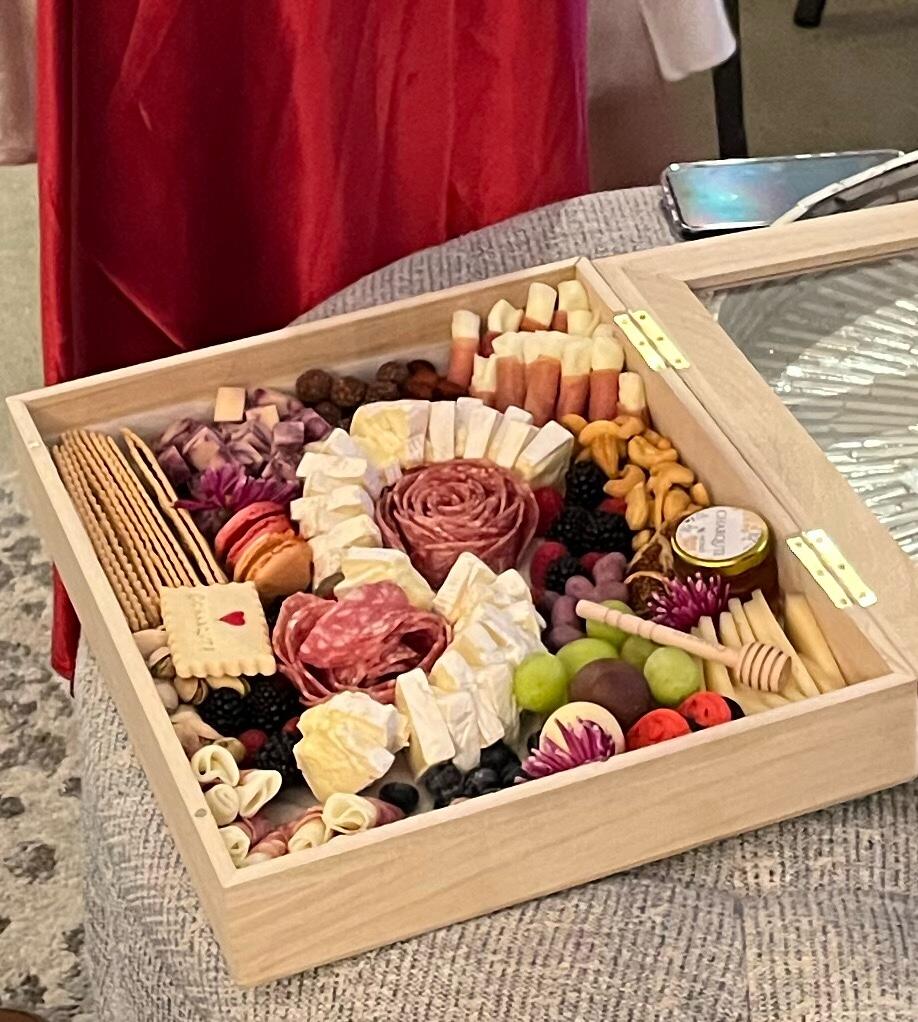
At its core, a charcuterie board is a curated spread of cured meats, cheeses, and the things that go with them: crackers, nuts, dried and fresh fruit, olives, jam, and other savory bites. Technically, "charcuterie" refers just to the cured meats, but in practice the term now covers the whole board.
How do you actually make a charcuterie board?

The short version: start with your cheeses (a mix of textures — soft, firm, and aged), add two or three cured meats, then fill in the gaps with crackers, nuts, dried and fresh fruit, olives, and something sweet like jam or honey. Group similar items together, layer for height, and let the colors and textures do the visual work. If you want the full walkthrough, we've laid it out step by step in our how-to-build-a-board guide. Of course, if you'd rather skip the assembly entirely, that's the whole point of ordering one from us.
What's the difference between a charcuterie board and a grazing table?
Scale is the main thing. A board is a compact, curated spread built for a smaller group, usually somewhere between 2 and 20 people. A grazing table is a full table of food, built for bigger events, with more height, more variety, and more visual impact. If you're hosting a dinner party, you probably want a board. If you're planning a wedding or a large corporate event, you're looking at a grazing table. We build both, from Mini Boards up through our Custom Charcuterie Tower & Table for larger installations.
How many people does a board actually serve?

It depends on the size:
- Mini Board (9" x 9"): 1–2 people
- Medium Round Lazy Susan Board (16" round): 10–13 people
- Large Square Lazy Susan Board (18" x 18"): 15–18 people
- Custom Tower & Table: built to your headcount, for larger or fully custom events
If you're not sure which size fits your gathering, we've got a full breakdown in our sizing guide.
Do you deliver charcuterie boards in the LA area?
Yes. We're based in Los Angeles and deliver on all purchased items. For grazing tables specifically, we also handle full on-site setup as part of the order.
How far in advance do I need to order?
You can place an order with us up to 6 months in advance, or as late as same-day if you order before 10:30am. Specialty boards are the one exception — if you're after something custom, please reach out to us directly before purchasing so we can confirm we can make it happen.
Can you accommodate dietary restrictions?
Yes. We regularly build boards that are vegan, gluten-free, nut-free, or pork-free, at no additional cost. Worth noting: we're not a dedicated gluten-free or nut-free facility, so these substitutions work well for a preference but aren't a safe option for celiac disease or a severe nut allergy. We cover this in more detail in our dietary alternatives guide.
Do you offer charcuterie boards as gifts?

Yes — our Charcuterie Gift Box is built specifically for this, and we also offer gift cards in a range of denominations if you'd rather let the recipient choose their own board. Charcuterie makes a great gift, and it's not just a holiday thing, though we do see a real jump in interest as the winter holidays approach.
What wine pairs well with a charcuterie board?
The general rule: lighter wines with delicate flavors, fuller-bodied wines with richer ones. A crisp Sauvignon Blanc or Pinot Grigio works well against soft, creamy cheeses and lighter cured meats. A Cabernet Sauvignon, Merlot, or Pinot Noir stands up better to hard cheeses and darker, saltier meats like salami. If you're going sparkling, Prosecco or Champagne pairs especially well with prosciutto and other salty cured meats.
Have a question we didn't cover here? Send it our way and we'll answer it directly, and maybe add it to this list.
— Karreno